
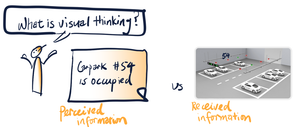
What is Visual Thinking
Definition
Visual thinking is the process of using visual elements to organize, process, and communicate ideas. It involves leveraging the brain’s natural ability to interpret and understand visual information more quickly and effectively than text alone. This approach helps to convert “perceived” information to “received” information.
Usage
Where have we used Visual Thinking to elevate outcomes?
- Helping learners connect to concepts (e.g. School Values)
- Large planning events for NZ enterprises (e.g. Foodstuffs North Island, Roche Products).
- Bringing conferences and discussions to life in community settings
- Alignment Workshops and Team Building with Lego Serious Play
- 1 on 1 coaching (see conversation mapping example)
- Change mangement communications (see Hybris Commerce Sketch video)
Theory
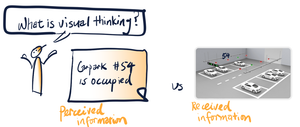
In the above example, green / red lights above car parks make it easy to tell at a glance if a car park is available.
Notice that nothing in this definition refers to “drawing”. You can practice visual thinking even by writing tasks on post-its, and visualising them on a board!
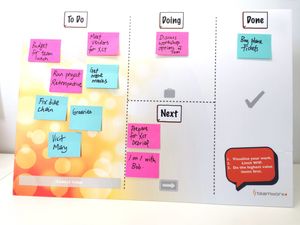
The above is a Kanban18 board desktop organiser. Kanban is a visual management system invented in Japan. I am a firm believer that you cannot fix what you cannot see. Visualising your work allows you to spot the botlenecks, such as if you have too many tasks in the “Doing” column!
Shameless plug - purchase one of these desktop organisers here.
Examples
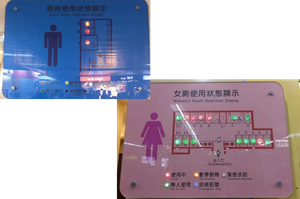
Here’s a more light-hearted example of visual thinking. During my annual trip to Taiwan, I noticed the clever use of status indicators to indicate toilet availablity. I’ve always wondered what would trigger the blue “investigation alert”. Clever!
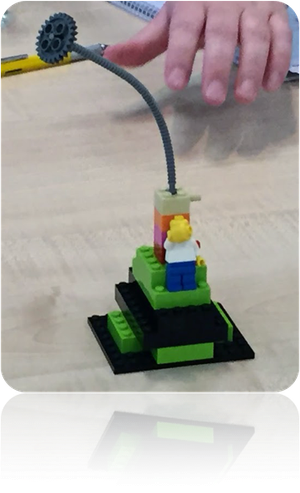
In this next example above, we have a LEGO model of the success factors for a project. The minifigure represented an agreement that the customer would always be in the centre of the project. The bendy pipe on top of the model captured the project sponsor’s authorisation to “flex” the scope in order to meet the customer’s needs. That was a very powerful statement to capture. I placed this LEGO model in the project team’s work area, to serve as a reminder to always be customer-centric.
These are flipcharts with post-its capturing the risks in a project. One post-it read “Security Folks changing their mind”. A possible mitigation measure was to take them out to lunch. I can’t actually remember if the team did that. It would have been a nice thing to do in any case! We housed those flipcharts in the same project area where the LEGO model was kept.
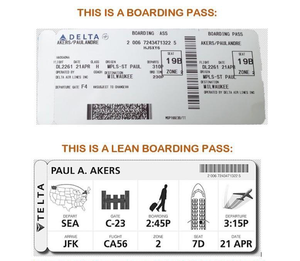
The airline industry is notorious for it’s complex nomenclature and myriad of information. I saw this “Lean Boarding Pass” doing it’s rounds in LinkedIn and wished it was real! Although no information is changed on the boarding pass, the use of imagery makes it easier for the brain to process.
Get the Book
This is an excerpt from The Visual Coach Handbook. Grab your copy for more visual facilitation inspiration!